When a coach sums up a game by saying that “there’s no silver lining,” it is not really too difficult to insinuate what the meaning of that is.
SUBSCRIBE TO AUBURN UNDERCOVER TODAY
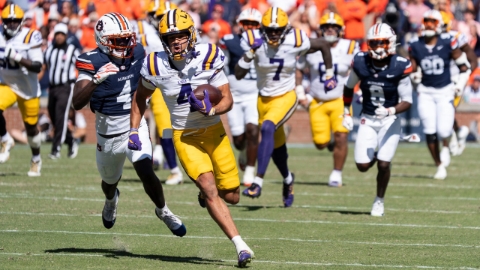
For the Auburn Tigers offense, that statement was evidenced by the fact that the LSU Tigers outgained it by 281 yards overall on Saturday. What is even more eye-opening, LSU had more pass yards on the day than Auburn had total yards.
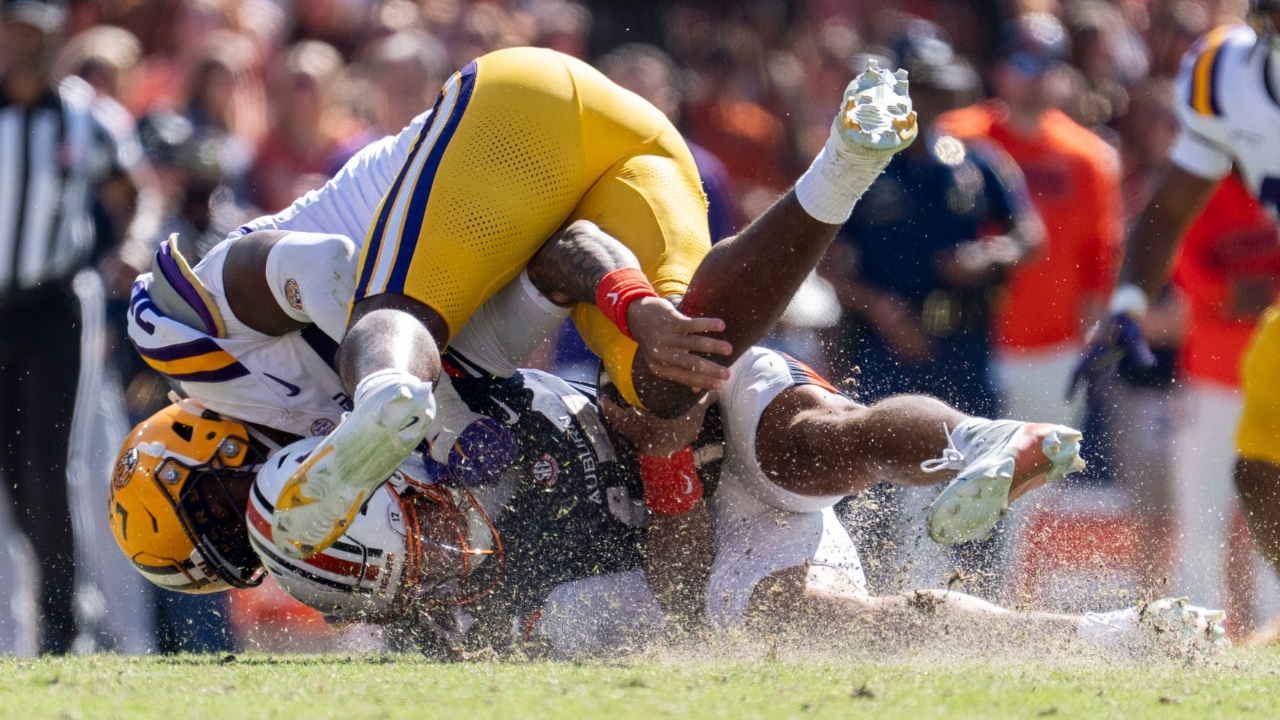
It was a couple of many stats of the Tiger Bowl that defined Auburn’s 38-17 loss on Saturday, marking Auburn’s largest home loss in three years.
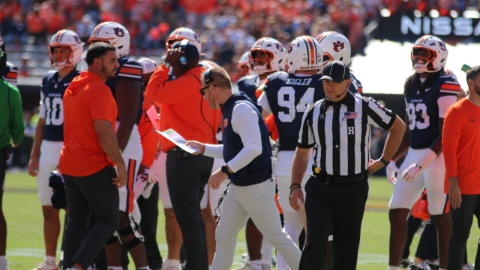
“Offensively, 7-of-11 drives were four plays or less,” said Auburn Head Coach Alex Golesh. “Between the sacks and the TFLs, there were close to 20 negatives there. We were not efficient offensively early. We were not efficient as we went. In the second half, from an adjustment standpoint, it didn’t look like anything that would resemble good offensive football.”
Auburn punted on four of its seven drives in the first half, and three of its four in the second half, with four of the punts overall being the end to a three-and-out.
All four of those punts came in the first half of play, and while it is still certainly up to the defense to make stops, the offense did not help any cases, ultimately going into the halftime break down 31-10.
It was a day where the positives simply were nonexistent acriss the field.
“Just didn't execute throughout the entirety of a drive,” said quarterback Byrum Brown. “Get plays going, then shooting ourselves in the foot, and can't win like that.”
The efficiency numbers were not nearly there for Auburn either, as it only gained 4.2 yards per play, and when it got to third downs, it had an average distance of 10.2 yards to go.
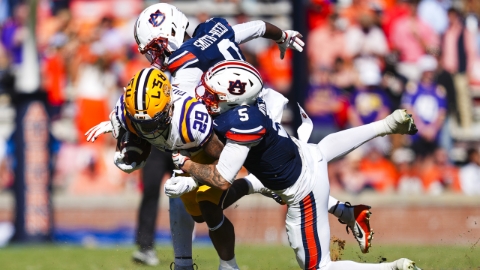
A lot of that stood because of the sacks that were given up. LSU notched 12 tackles for loss on Saturday, seven of which were tallied as sacks.
LSU’s defense keyed in on Brown, who rushed for 115 yards in last week’s win. He only rushed for 21 on Saturday in a game in which Golesh thought the plan was solid going in in terms of protection.
“I've got to figure it out from a film standpoint: Why, at times, are we holding onto it?” Golesh said. “You saw the plan, where we got three-out a couple of times rather than four, to try to protect on the edges. I thought that was a huge key to the game, to be able to neutralize the edges in the pass-rush world. When we were protecting with six, it didn't look pretty. Tried to get more out, and ended up not being able to hold up in pro on the edges.”
Brown’s rushing performance was part of a ground game that only gained 67 yards on the day, Auburn’s worst rushing performance of the year.
In an offense where Golesh was hoping to establish the run game and make it a true staple, things were certainly not working out at home.
“I thought you saw us go to some outside zone stuff and some mid-zone,” Golesh said. “And again, you've still got to create movement on the front side of that for it to be able to string out and find holes inside. We just — we weren't good enough. We weren't, and we didn't find enough creative ways to be able to generate a run game.”
In addition, it was Auburn only gaining 5.2 yards on average on first downs, which did not put the team in many favorable positions in later downs.
It certainly limited the offense, and ultimately hurt the team as a whole in terms of being able to compete.
“It definitely makes it tough because you’re in third-and-long or second-and-long, it doesn’t give you a chance to open up the playbook,” said wide receiver Chas Nimrod. “Just being limited on things you can do and calls like a coordinator, that just changes the way you can play the game. Obviously, getting the first first down and just being able to move the ball and not hurt yourself, that helps a lot.”
With the game over though, Auburn flushes things and moves on to its next opponent in Ole Miss.
The loss was a tough pill to swallow for Golesh’s program, but Brown says those performances can come in these kinds of rebuilding processes. At the end of the day, how it responds will define the outlook of this team.
“It's a part of it,” Brown said. “There's ups, there's downs, and this is obviously a down, last week was up, but this is gonna help define who this 2026 Auburn football team is, how we respond this week into next week, and [I’m] looking forward to it.”
Auburn Undercover is an independent Auburn sports media company covering Auburn athletics, recruiting and insider news.